
Multiwall Polycarbonate Sheet
Twin-wall, triple-wall, X-structure and honeycomb PC sheet for daylighting roofs, cut to your panel plan.
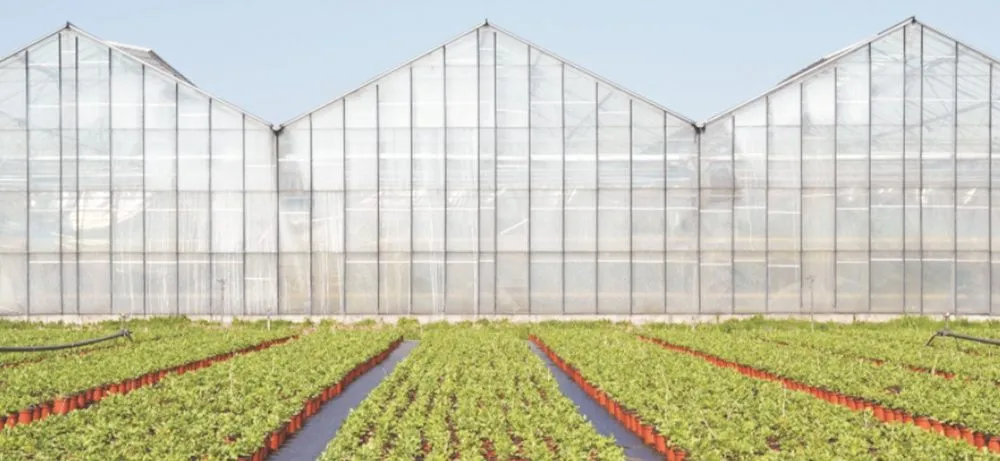
Greenhouse PC glazing selected for crop light, condensation, climate, support and UV-facing orientation.
Choose greenhouse PC glazing around the crop and the growing system, not a thickness label alone. Tell us what light reaches the crop today, where condensation collects, and how the frame supports each panel. SinoPlastix can propose a custom multiwall section, colour, UV face and cut plan for a sample trial and written quotation.
Send a greenhouse panel plan See multiwall PC sections
Our current multiwall PC range includes the product-family options below. They are starting points for an enquiry, not a promise of the light level, U-value or roof span of every grade. The written offer identifies the actual rib section and thickness.
Swipe the table sideways to see all columns →
| Section to discuss | Published family range | Greenhouse question |
|---|---|---|
| Twin-wall | 4–10 mm | Is daylight the main priority, and what does the actual panel transmit at the crop level after framing? |
| Triple/four-wall | 10–16 mm | Does the heating plan justify comparing another chamber structure and its grade-specific thermal data? |
| X-structure or honeycomb | 16–25 mm+ | Can the frame accept the offered section, weight, light appearance and connector detail? |
Clear, opal and diffusing samples can look similar in a catalogue yet behave differently across a crop bench. Ask for the proposed grade’s light-transmission and haze or diffusion data with its test method, then compare physical samples under the intended growing conditions. If the crop has a defined light target, include it in the enquiry rather than asking for a universally “best” greenhouse sheet.
For an existing house, record the crop, growth stage and season. Measure photosynthetic light just above the crop and outdoors at nearly the same time under reasonably consistent daylight with a PAR/PPFD meter, then note shade from the frame and equipment. Human-vision lux readings are not a substitute for a crop-light measurement. The University of New Hampshire Extension worksheet explains the inside/outside comparison and daily-light-integral approach. A paired instant reading is only a transmission check; it is not the crop’s daily light integral or a yield forecast. Use the same comparison method when reviewing a proposed sample.
Mark where water droplets form and where they must drain. If dripping onto plants is the problem, request the anti-fog or anti-drip option for the relevant face and its applicable test report. The treatment affects condensate behavior on the panel; ventilation, irrigation and humidity control remain part of greenhouse management. Also state whether both faces receive direct sun so the UV-protected construction and installation marking match the job.
Include the roof and sidewall plan, frame spacing, panel length, slope, channel direction, end-closure and joining detail, climate loads, crop-light objective, sample colour, condensation issue, quantity and destination. Tell us if you want compatible closure tapes and profiles quoted with the PC panels. A photo of a failed or dirty existing panel helps identify the problem, but dimensions and frame details still control the cut plan.
SinoPlastix supplies custom PC specifications. Sales can provide common test-report originals privately for the grade and thickness proposed. The written quotation confirms section, colour, UV and anti-fog faces, cut dimensions, accessories, price and production window; published price or lead time is an average planning reference, and actual timing depends on product complexity. The greenhouse designer checks the finished glazing assembly against site loads and drainage.
There is no crop-independent answer. Start with crop light, heating, condensation and frame conditions. Compare offered clear or diffusing samples and the actual section’s optical and thermal data, then trial the choice in the growing system.
No sheet alone can make that promise. An applicable treatment can change how condensate behaves on its specified face; crop disease also depends on humidity, ventilation, irrigation and management. Request the report for the proposed grade and test condition.
Follow the UV-face marking and instructions for the quoted panel. Show the exposed face and channel drainage direction on the installation plan before cutting and fixing.
For more detail, compare multiwall section options and the anti-fog PC grade. For roof-system loads and fixing responsibilities, see PC roofing applications.
Where to look next
Twin-wall, triple-wall, X-structure and honeycomb PC sheet for daylighting roofs, cut to your panel plan.
Anti-fog polycarbonate panels for viewing windows and condensation control, specified around your application and cleaning conditions.
Rooflights and roofing PC panels: confirm structure, loads, support, drainage, UV orientation and fixing details.
Custom clear PC panels for building openings: send the opening schedule, frame detail, exposure and required evidence for a quote.
Start with a trial order
Send the grade, dimensions, quantity and destination, or upload a drawing. Your quote will show the applicable minimum, production window and FOB, CIF or DDP delivery basis.