
Frosted Acrylic Sheet
Matte on one or both faces — privacy and soft light, with a surface that hides fingerprints.
Matte-surface polycarbonate for privacy and glare control; confirm the offered face construction and optical data before approval.
Frosted polycarbonate should be specified by the viewing task and by the exact surface construction offered. State whether the panel must obscure detail, reduce reflected glare, soften transmitted light or hide handling marks. Then compare haze and luminous transmittance on a grade-specific report and approve a physical sample under the project’s lighting.
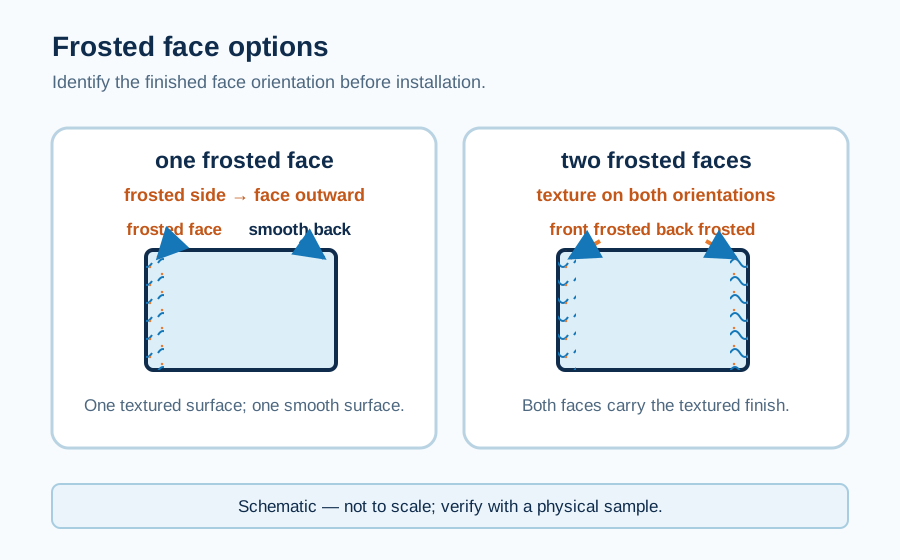
“Frosted” may describe an embossed or textured surface, a modified resin appearance, a coating or another supplier-specific construction. The order should name which face is treated, whether the two faces differ, how the installation face is identified and whether later forming or fabrication affects the finish.
| Surface choice | Use it when | What must be confirmed |
|---|---|---|
| One frosted face | Only one viewing or exposed side needs glare and mark control. | Face orientation, protective film marking and cleaning side. |
| Two frosted faces | Both sides are visible or touched. | Whether appearance and optical data apply to the two-face construction. |
| Frosted plus functional coating | Abrasion, chemical or weathering exposure requires another surface function. | Layer order, coated face, fabrication limits and report scope. |
| Clear or tinted frost | Privacy, colour and transmitted light must be balanced. | Physical colour reference and project-lighting sample. |
Do not infer that a textured face can never change in service. Cleaning, abrasion, forming and chemical exposure can affect appearance even when the texture is integral to the sheet. Ask for the offered construction and care guidance, then test the real cleaning method on a sample.
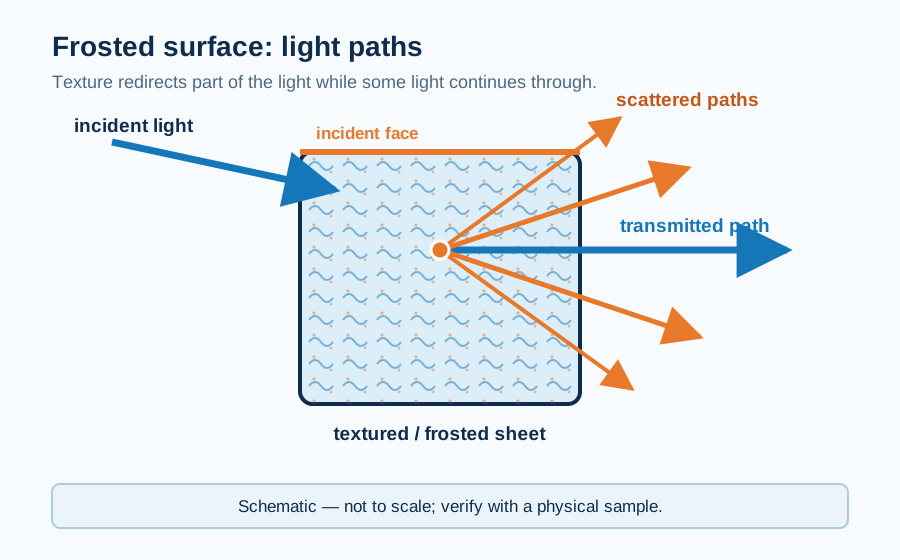
Haze and luminous transmittance answer different questions. A panel can pass a substantial amount of light while scattering it enough to obscure detail. A transmission figure alone does not define privacy, and a haze figure alone does not tell the designer how bright the space will feel.
ASTM D1003 is one published method for haze and luminous transmittance of planar transparent plastics. A useful supplier report identifies the test method, grade, colour, thickness, surface configuration, specimen conditioning and result. If two reports use different methods or specimen constructions, do not treat the numbers as a direct ranking.
Privacy is also geometric. View a person, object or printed target at the real distance from the sheet, from both directions, with the background illuminated as it will be in service. A bathroom screen, machine window and luminaire cover need different acceptance criteria even if they use the same word “frosted”.
Polycarbonate is commonly considered where impact risk makes a brittle glazing response undesirable. The frosted surface does not by itself prove a particular impact value. Where impact is part of the specification, request evidence for the offered grade and thickness under the relevant method, and evaluate holes, edges, supports and temperature in the finished panel.
If the main priority is a hard decorative surface and severe impact is unlikely, compare frosted acrylic. If the main task is lamp hiding in a light box, compare a purpose-made diffuser grade. These materials can look similar in a small unlit sample while serving different design problems.
Label the sample with grade, colour, thickness, treated face or faces, sample date and orientation. Inspect reflected glare, transmitted light, privacy, colour and handling marks. Use the actual lighting and view it from the installation distance. Keep one signed reference for incoming inspection.
If the sheet will be bent, drilled, routed, printed or bonded, include those operations in a first article. Fabrication can create stress, edge whitening, local gloss changes or contamination that a flat sample does not show. The approval record should state which defects are unacceptable and where appearance is critical.
Send the finished size, thickness target, quantity and destination. Define colour, one- or two-face frost, exposed face, privacy distance, background lighting, impact requirement, indoor or outdoor use, cleaning chemistry and every fabrication step. If optical evidence is required, name the method and ask for the report that covers the quoted construction.
SinoPlastix can review extrusion and fabrication inputs and provide an offer tied to a labelled sample. The project designer remains responsible for structural, fire, guarding and regulatory approval of the installed assembly.
Request a frosted sample Compare frosted acrylic
ASTM D1003 explains why haze and luminous transmittance need stated procedures and specimen conditions. It is a test-method reference, not a SinoPlastix grade report. The order-specific evidence remains the quoted product document and the approved physical sample.
From the factory
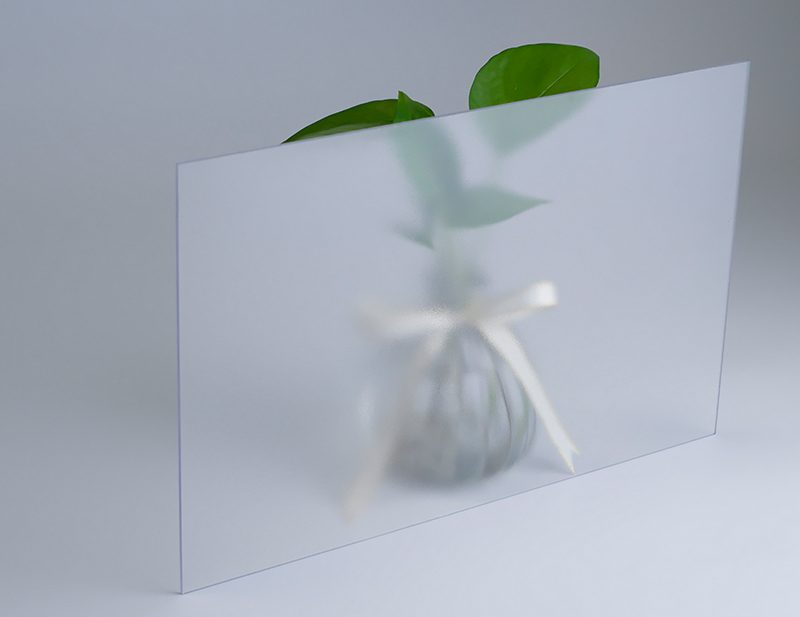
Images show the referenced product, process or application. Ask for a current production sample when colour, finish or fit must be approved.
Where to look next
Matte on one or both faces — privacy and soft light, with a surface that hides fingerprints.
Embossed patterns rolled into the surface — privacy, grip and glare control without losing strength.
Office screens, dividers and decorative glazing — light, safe and easy to fabricate.
Light-diffusing polycarbonate with diffusion uniformity above 95% — hides the LEDs, keeps the output.
Start with a trial order
Thickness, size, colour, quantity — or just upload the drawing. We quote in USD on FOB, CIF or DDP terms, from 100 m² or 1 tonne. No full-container commitment required.