
LED Diffuser Sheet
Light-diffusing polycarbonate with diffusion uniformity above 95% — hides the LEDs, keeps the output.
Even glow-through white for lightboxes and signage — no hotspots, no visible tube or LED lines.
White opal acrylic is specified for a lit result, not for an unlit colour chip. The correct grade balances transmitted brightness, diffusion and lamp hiding at the quoted thickness. Shortlist material from grade data, then approve it in a test box using the project’s LED type, lamp spacing, cavity depth, interior reflectance and viewing distance.
“Opal”, “milky white” and “light-diffusing white” are market descriptions. They do not define one optical performance. A grade that works in a deep sign cabinet may show LED points in a shallow menu board; a high-hiding grade may look even but deliver less face brightness than the designer expects.
Ask for the offered grade code, thickness and current optical document. The report should identify how luminous transmittance and diffusion or haze were measured. Do not transfer a value from another grade, another thickness or a supplier’s demonstration box to the order without saying so.
| Project priority | Likely trade-off | Approval question |
|---|---|---|
| Maximum face brightness | A more transmissive grade may reveal lamp points or lines. | Is uniformity acceptable at the intended viewing distance? |
| Strong hotspot hiding | More scattering or opacity can reduce delivered brightness. | Does the lit face still meet the design intent? |
| Neutral white appearance | Lamp spectrum, sheet colour and cabinet interior interact. | Is the approved sample viewed with the production LED? |
| Outdoor or warm service | Exposure and heat can change the evidence required. | Does the grade document cover the actual environment? |
Cavity depth is the distance from the emitters to the acrylic face. Lamp spacing is the centre-to-centre pattern of the emitters. Both determine how much distance the light has to mix before it reaches the panel. A material sample tested over a different grid cannot settle the result for your fixture.
Record the LED module or strip, lens angle, spacing, cavity depth, cabinet colour, dimming level and any secondary diffuser. Include dark zones near returns, fixings or graphics. If the box has more than one geometry, test the shallowest or least forgiving area rather than the easiest central field.
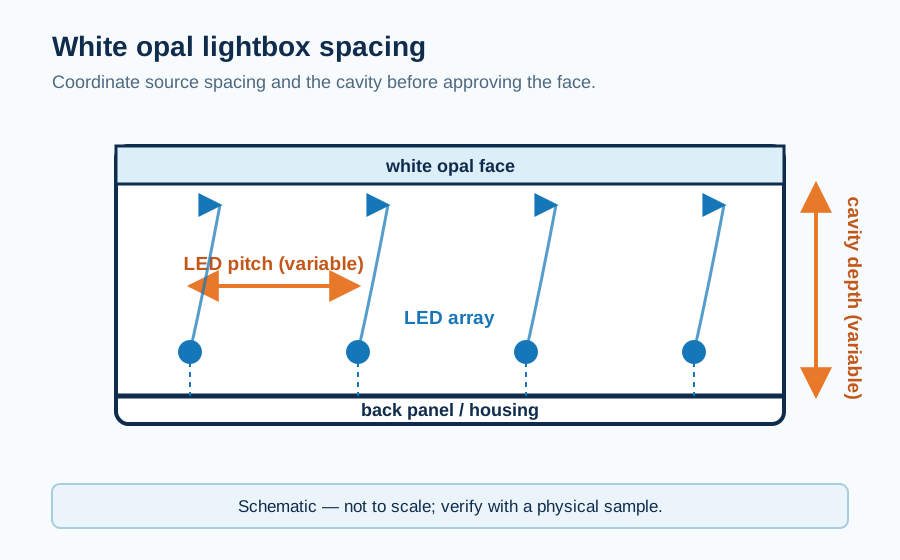
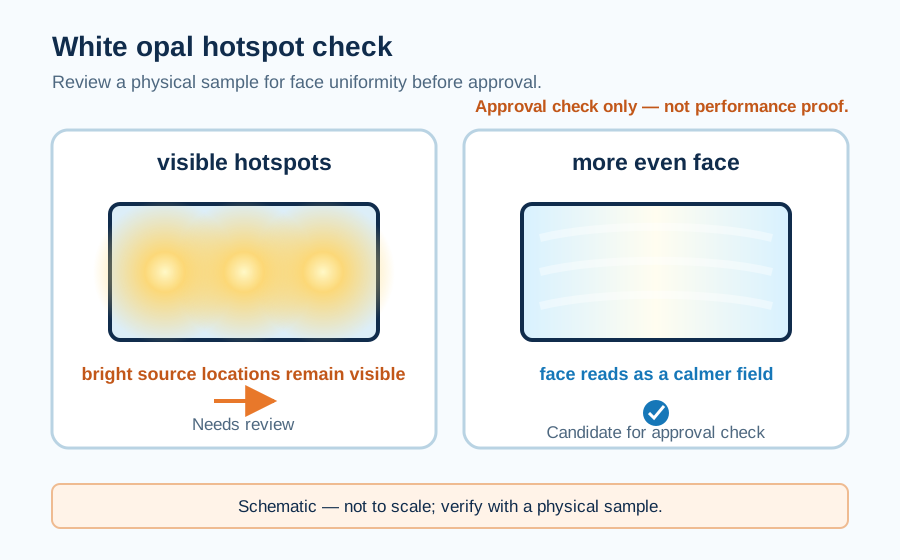
Luminous transmittance describes how much visible light passes through under a stated method. Haze describes wide-angle scattering for transparent plastics under its stated method. Hotspot hiding is an assembly outcome influenced by the sheet, light source and geometry. These terms are related, but they are not substitutes.
A supplier may publish one or more of them. Compare values only when the grade, thickness, specimen conditioning and method are clear. Where the sheet is strongly diffusing, ask how the manufacturer characterized it and request the underlying report rather than forcing unlike results into one ranking.
The approval sample should be labelled with grade, thickness, colour, surface, lot or sample reference and orientation. Put it into the actual or representative cabinet and inspect it both lit and unlit. Record face brightness or the project’s practical proxy, visible lamp pattern, colour appearance, surface defects and edge shadows.
Approval must also cover fabrication. Holes, printed graphics, bonded returns and formed shapes can alter the way light leaves the panel. If the finished component includes these operations, a flat unprocessed swatch is only a material screen; the fabricated first article is the production approval.
Do not accept an unlimited colour-stability statement. Ask whether the grade is intended for interior, exterior or illuminated service and which exposure method or warranty terms apply. Lamp heat, ventilation and distance from the face belong to the fixture design. A sheet document cannot compensate for an overheated cabinet.
Where a panel faces impact, vandalism or a specific fire requirement, compare a polycarbonate diffuser grade as a separate option. Keep the offered material and compliance evidence explicit; “diffuser” does not make acrylic and polycarbonate interchangeable.
Send the face dimensions, thickness target, quantity and destination together with the LED type, pitch, cavity depth, cabinet interior and viewing distance. State whether the priority is brightness, lamp hiding or a particular unlit white. Identify printing, forming, holes, bonding and edge details.
SinoPlastix should return a grade-specific offer, the available optical evidence and a labelled sample plan. Commercial terms and fabrication scope belong on the same quotation so the sample cannot be separated from the material actually supplied.
Request a lit-sample review Compare polycarbonate diffuser sheet
Plaskolite’s published OPTIX Cell Cast LED literature is an example of grade- and test-box-specific diffusion data: it names thickness and the lamp-box conditions used. It does not establish SinoPlastix product values. Use the same discipline—named material, stated setup and a physical lit sample—when approving this order.
From the factory
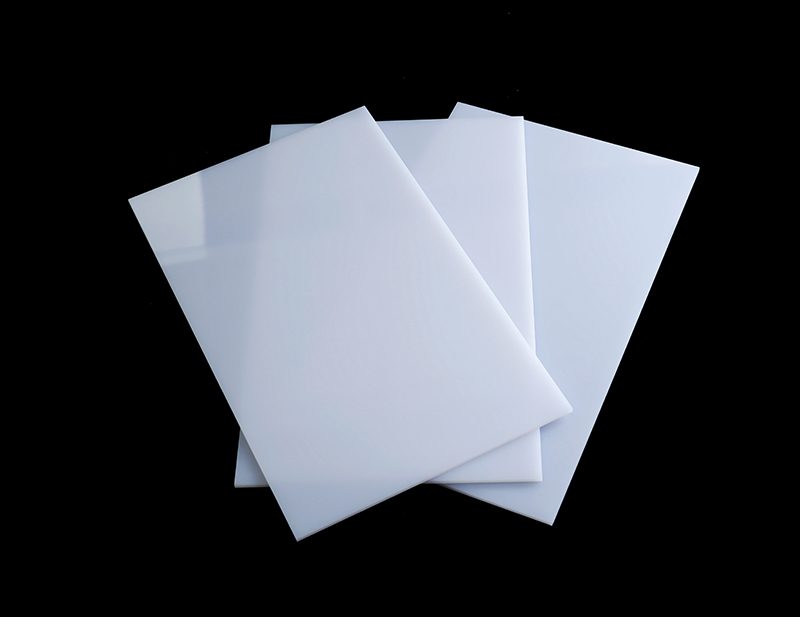
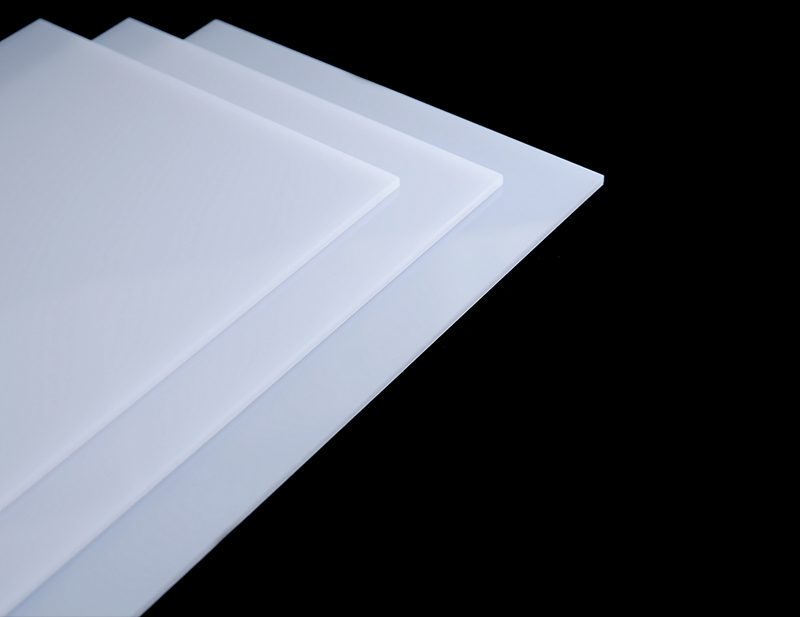
Images show the referenced product, process or application. Ask for a current production sample when colour, finish or fit must be approved.
Where to look next
Light-diffusing polycarbonate with diffusion uniformity above 95% — hides the LEDs, keeps the output.
Diffusers, lightbox faces and illuminated fascias — even output with no visible LED lines.
Matte on one or both faces — privacy and soft light, with a surface that hides fingerprints.
Transparent, translucent and opaque colours matched to Pantone, RAL or your sample.
Start with a trial order
Thickness, size, colour, quantity — or just upload the drawing. We quote in USD on FOB, CIF or DDP terms, from 100 m² or 1 tonne. No full-container commitment required.